The Workforce Behind HealthTech Innovation: Regulatory and Technical Talent Dynamics

HealthTech is scaling fast – from AI-powered diagnostics and digital therapeutics to biotech software platforms and clinical data ecosystems. But behind every product that reaches patients is something less visible: the workforce infrastructure that makes compliant innovation possible.

As companies enter regulated markets earlier and scale validated digital systems, demand for regulatory-aware technical talent is rising. Industry reports continue to highlight the expansion of digital health solutions and the growing maturity of the space.

For example, the IQVIA Institute’s Digital Health Trends 2024 report tracks the maturation of digital diagnostics and therapeutics, while the WHO global strategy on digital health emphasizes the need to align technology with organizational and human resources.

HealthTech growth is reshaping workforce models

HealthTech does not scale like traditional SaaS.

Innovation happens inside regulated clinical and life sciences environments, where platforms must meet quality, validation, and data integrity expectations. That reality changes team design. Organizations increasingly build interdisciplinary groups that combine engineering, QA/validation, and regulatory expertise – because compliance execution is now part of the product lifecycle.

The Rise of Venture-Backed HealthTech Startups

Alongside global pharmaceutical and medical technology enterprises, a new wave of venture-backed startups is entering regulated healthcare markets.

AI-native biotech firms, digital health platforms, and clinical data companies are launching products directly into FDA-regulated and GxP-governed environments.

Unlike traditional startups, they must build compliance capabilities early.

This creates immediate demand for:

Computer System Validation (CSV) engineers

Regulatory software specialists

Quality and audit professionals

Data compliance experts

Startups and enterprises are now competing for the same limited talent pools – accelerating hiring pressure across the sector and highlighting the importance of effective life science staffing solutions.

Talent acquisition becomes part of the regulatory roadmap

In HealthTech, recruiting is increasingly tied to regulatory readiness. Workforce planning often aligns with validation milestones, audits/inspections, and submission timelines.

When validation and compliance roles are understaffed, teams can experience delays in documentation, testing evidence, and inspection preparedness – impacting time-to-market.

AI is transforming validation itself

AI is not only changing healthcare products; it is also reshaping how those products are validated.

Risk-based approaches, automated testing, and continuous monitoring are becoming more common – especially for fast-scaling teams that need audit-ready traceability without endlessly scaling headcount. Regulators have also published frameworks and action plans focused on AI/ML-based Software as a Medical Device (SaMD), pushing the industry toward clearer expectations and lifecycle oversight.

The growing adoption of AI technologies across healthcare – including machine learning, NLP, and computer vision – is accelerating not only product innovation but also the need for scalable validation frameworks.
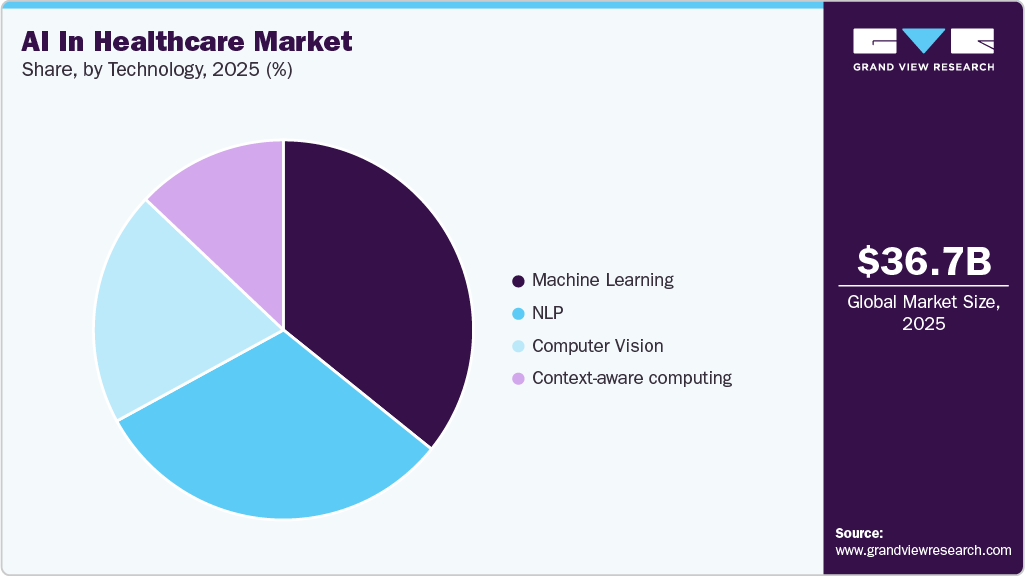
AI in healthcare market

Demand for validation and compliance talent is outpacing supply

One of the biggest constraints in HealthTech is the shortage of GxP/CSV-ready professionals. Training cycles are long, institutional knowledge matters, and experienced talent is limited.

Enterprises tend to compete with stability and established programs, while startups attract candidates through equity, innovation exposure, and platform-building opportunities.

New workforce structuring models

To close capability gaps, organizations are adopting more flexible models:

Blended FTE + consulting validation teams

Fractional compliance leadership for early-stage firms

Global delivery models for validation and quality execution

These approaches help companies scale compliance capacity while staying audit-ready.

Conclusion

HealthTech innovation is often described through algorithms, platforms, and breakthrough products. Yet none of it scales without the people who validate, regulate, and operationalize it.

As AI adoption accelerates and regulated digital systems expand, the intersection of technology, compliance, and talent strategy will define which organizations move fastest – and which fall behind.


Learn more about AI adoption and market dynamics: Grand View Research’s AI in Healthcare market report

Regulatory perspectives on software assurance and validation: FDA Computer Software Assurance (CSA) guidance and FDA Part 11 guidance

Workforce and skills trends: OECD report on digital and AI skills in health occupations

From Niche to Key Skill: Prompt Engineering

Over the past year, one of the most talked-about new roles in tech has been the Prompt Engineer. Just a short time ago, this title didn’t exist. Now, companies are hiring for it – sometimes with six-figure salaries – and building entire teams around working with large language models (LLMs).

Prompt engineering is a modern skill set. It doesn’t involve traditional programming, but it does require technical thinking, creativity, and a deep understanding of how AI models respond to human language. As LLMs like GPT-4 and Claude become a bigger part of business operations, this role is shaping up to be one of the most in-demand in AI.

What Is Prompt Engineering?

Prompt engineering is the process of designing the inputs – or “prompts” – that guide how an AI model responds. A well-written prompt can help the model generate high-quality content, solve a technical task, or even simulate decision-making. A poorly written prompt can produce vague or incorrect results.

Prompt engineering concept: human and AI robot reaching to connect

From my experience, one Series A AI startup faced challenges with a customer-facing chatbot that delivered inconsistent answers and frustrated users. They reworked the chatbot’s prompts and tried out different ways of asking the same questions. That small shift made a big difference – the bot started giving clearer answers, users stopped getting confused, and the support team had way fewer issues to deal with. It gave the startup room to breathe and focus on growing the product.

What makes this role unique is that it sits at the intersection of language and logic. It doesn’t require writing code, but it does require structured thinking. Many prompt engineers today come from non-traditional backgrounds – including writers, marketers, educators, and business analysts – who’ve learned how to communicate effectively with AI systems.

Why Companies Are Hiring Prompt Engineers

As more businesses integrate AI into their products and workflows, they need people who know how to get the most out of those systems. Tools like GPT, Claude, and Mistral are powerful – but they’re only as good as the prompts they receive.

Here are some practical examples of how prompt engineers are helping teams work smarter: As more businesses integrate AI into their products and workflows, they need people who know how to get the most out of those systems. Tools like GPT, Claude, and Mistral are powerful – but they’re only as good as the prompts they receive.
Here are some practical examples of how prompt engineers are helping teams work smarter:

  • Writing and refining prompts for AI chatbots in customer support
  • Helping legal teams draft documents faster using language models
  • Supporting product teams with AI-assisted prototyping and UX copy
  • Training internal AI tools to generate reports, emails, or code snippets

Prompt engineers act like a bridge between what people want to achieve and how AI systems work. By doing that, they help businesses work faster, get better results, and cut down on repetitive tasks.

A New Career Path for Non-Developers

One of the most exciting things about prompt engineering is that it opens up high-impact tech roles for people who don’t have a computer science degree. Even TIME highlights that these roles can pay six-figure salaries without requiring advanced coding skills or formal engineering education. Many professionals who once felt excluded from the AI space are now finding ways in – using their understanding of communication, user intent, and creative problem-solving.

At the same time, experienced engineers and data scientists are also learning prompt techniques to fine-tune how AI tools behave inside larger systems. It’s a new hybrid skill set – and demand is growing fast.

The Job Market Outlook

In 2025, there’s been a huge jump in job postings with titles like “Prompt Engineer,” “LLM Specialist,” or “AI Interaction Designer.” According to Aura Intelligence, AI-related roles overall more than doubled – rising from 66,000 to nearly 139,000 job listings between January and April alone. Everyone from early-stage startups to global companies is hiring for these roles, both full-time and contract. The demand is especially strong in industries like fintech, marketing, education, and healthcare, where AI is quickly becoming part of everyday workflows.

That said, it’s worth noting that interest in prompt engineering specifically isn’t growing evenly across the board. Indeed search data shows that searches for “Prompt Engineer” spiked in early 2023, but have since leveled off, holding steady at around 20–30 searches per million. This suggests that while the AI job market is booming overall, many prompt-related responsibilities are being folded into broader roles within product, data, and operations teams.

Some firms are building internal prompt libraries and workflows – and need specialists to maintain and improve them. Others are hiring prompt engineers to experiment with different AI tools, figure out what works best, and document those best practices for their teams.

Conclusion

Prompt engineering is not just a passing trend – it’s becoming a key part of how modern organizations interact with AI. Whether you’re a recruiter, a product manager, or a technical writer, learning how to guide AI through clear, effective prompts is quickly becoming a valuable professional skill.

As the use of LLMs continues to grow, so will the demand for people who know how to work with them. Prompt engineers are emerging as the bridge between human ideas and machine intelligence – and the job market is taking notice.

The Impact of Generative AI on Tech Talent

Over the past year, we’ve seen generative AI go from something experimental to something foundational. It’s no longer just helping improve products – it’s changing how teams are built, how decisions are made, and which skills companies truly value.

This shift isn’t just about adding AI for speed or cost savings. Many companies are actually reorganizing around it. Development cycles are getting shorter, roles are being redefined, and traditional team structures are being challenged. In 2025, the impact of AI isn’t a future concept it’s already here, moving fast, and reshaping not just what we build, but who builds it and how they work.

AI-Induced Workforce Disruption

In just the past 12 months, it’s become clear that AI isn’t just changing tools – it’s forcing companies to rethink how their teams are structured. For many, the drive toward AI efficiency has come with hard decisions: layoffs, team realignments, and major shifts in how budgets are allocated, often leaning more toward automation and AI development.

Here are a few real-world examples that show just how big these changes are:

Microsoft has reportedly let go of nearly 15,000 employees, with a portion of those cuts linked to the growing use of internal AI tools that streamline software engineering tasks.

IBM reduced its workforce by 8,000, automating HR functions previously handled by people.

Companies like Workday, Salesforce, and Dell have trimmed headcount while doubling down on AI investments.

Klarna heavily automated its customer service operation, only to reverse course after customer satisfaction began to decline.

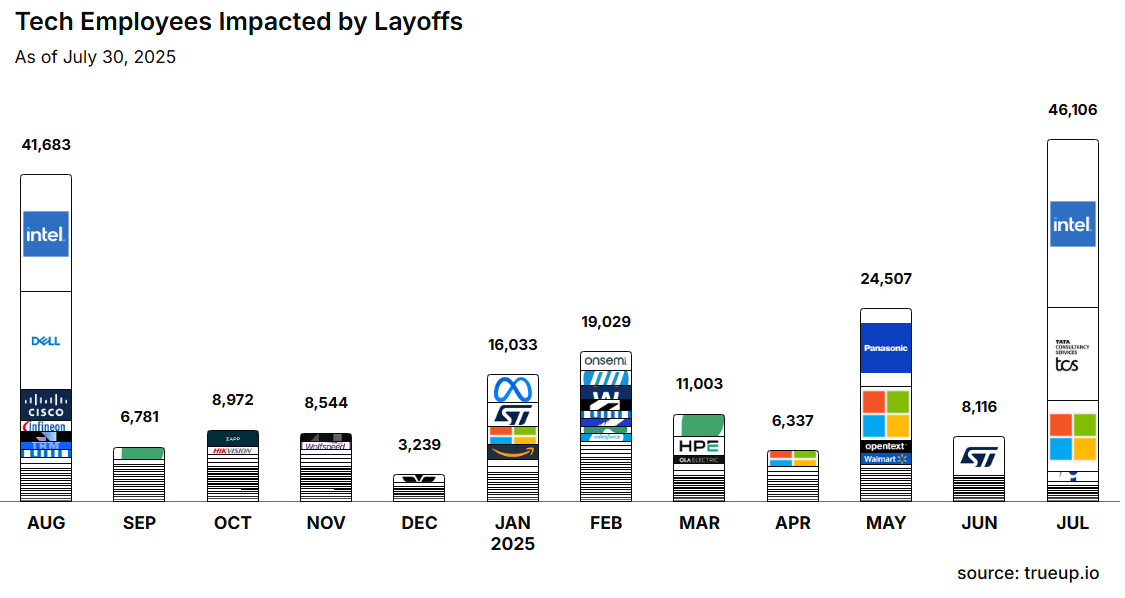
According to Forbes, over 77,000 tech jobs were cut in 2025 due to changes driven by AI – affecting 342 companies. Microsoft shared that 30% of its code is now written by AI, which means there’s less need for junior developers. At the same time, large tech companies hired 25% fewer recent graduates compared to the year before.

These shifts highlight a growing trend: while AI boosts speed and productivity, it’s also reducing some of the traditional ways people start careers in tech. And this is likely just the beginning of a much larger transformation.

Source: trueup.io

Generative AI’s impact on tech employees and workforce restructuring

Emerging Roles and Shifting Demand

As AI handles more of the repetitive and manual work, there’s a growing demand for people who can build, manage, and scale intelligent systems. Companies in nearly every industry are actively searching for talent that knows how to apply AI in real-world settings and turn it into something truly useful.

Some of the most in-demand roles today include:

AI/ML Engineers – who build and train machine learning models

LLM / Prompt Engineers – who fine-tune large language models and design effective prompts

MLOps Specialists – who manage the infrastructure needed to deploy and maintain AI models

AI Product Managers – who lead the strategy and development of AI-powered features

Applied Researchers – especially in areas like NLP, computer vision, and generative AI

These roles go far beyond basic coding. Employers are looking for people who are comfortable working with modern AI tools and frameworks like LangChain, HuggingFace, and OpenAI APIs, as well as those familiar with vector databases and AI-related privacy and ethics concerns.

In 2025, the right AI talent is becoming a major competitive advantage – especially for companies working in fast-moving fields like consumer tech, biotech, fintech, and advanced manufacturing.

AI in Innovation and Product Acceleration

One of the most noticeable ways generative AI is driving change is by speeding up how fast companies can launch new products. With AI-powered tools, teams can now prototype, test, and personalize features in days – things that used to take weeks or even months.

In many cases, AI is also helping shape product strategy. Forecasting tools analyze user behavior, product usage, and market trends, giving teams the insights they need to decide what to build next.

From what I’ve seen, the companies using AI not just in their products but across their internal workflows – in R&D, design, and marketing – are the ones moving faster and staying ahead. It’s no longer just about building something smart. It’s about how quickly and efficiently you can get it into the hands of users. That shift is changing how teams are built – they’re smaller, more focused, and structured around using AI to do more with less.

Why the Team Behind the Product Matters More Than Ever

A successful product is rarely the result of a great idea alone – it’s the outcome of strong execution by the right team. The way a company builds and develops its internal talent is increasingly becoming a key indicator of whether it can scale its innovations and stay competitive over time.

Here are a few important questions to ask:

Is the company using AI effectively within its own teams and internal processes?

Do engineering leaders understand and apply modern AI tools in their work?

Does the hiring strategy support long-term growth and the ability to scale AI solutions?

As AI becomes a bigger part of the products we use every day, the people behind those products need to grow with it. Today, it’s not just about using the latest AI tools. What really matters is having a team that knows how to work with them, can adapt quickly, and keeps learning. Companies that invest in people like that are the ones that move faster and stay competitive – especially in a world where technology is changing every day.

Conclusion

Generative AI is no longer something distant or experimental – it’s already driving major shifts across industries. In 2025, it’s clear that the companies moving forward aren’t just adding AI to their products – they’re rethinking how teams are built, how work gets done, and how to grow in a completely new environment.

As someone who analyzes industry trends, the most successful organizations are the ones that treat AI as a core part of their business – not just a side initiative or short-term experiment. Instead, they make AI part of their core strategy – bringing together the right people, tools, and goals to move forward with clarity and flexibility.